
Analytical Development
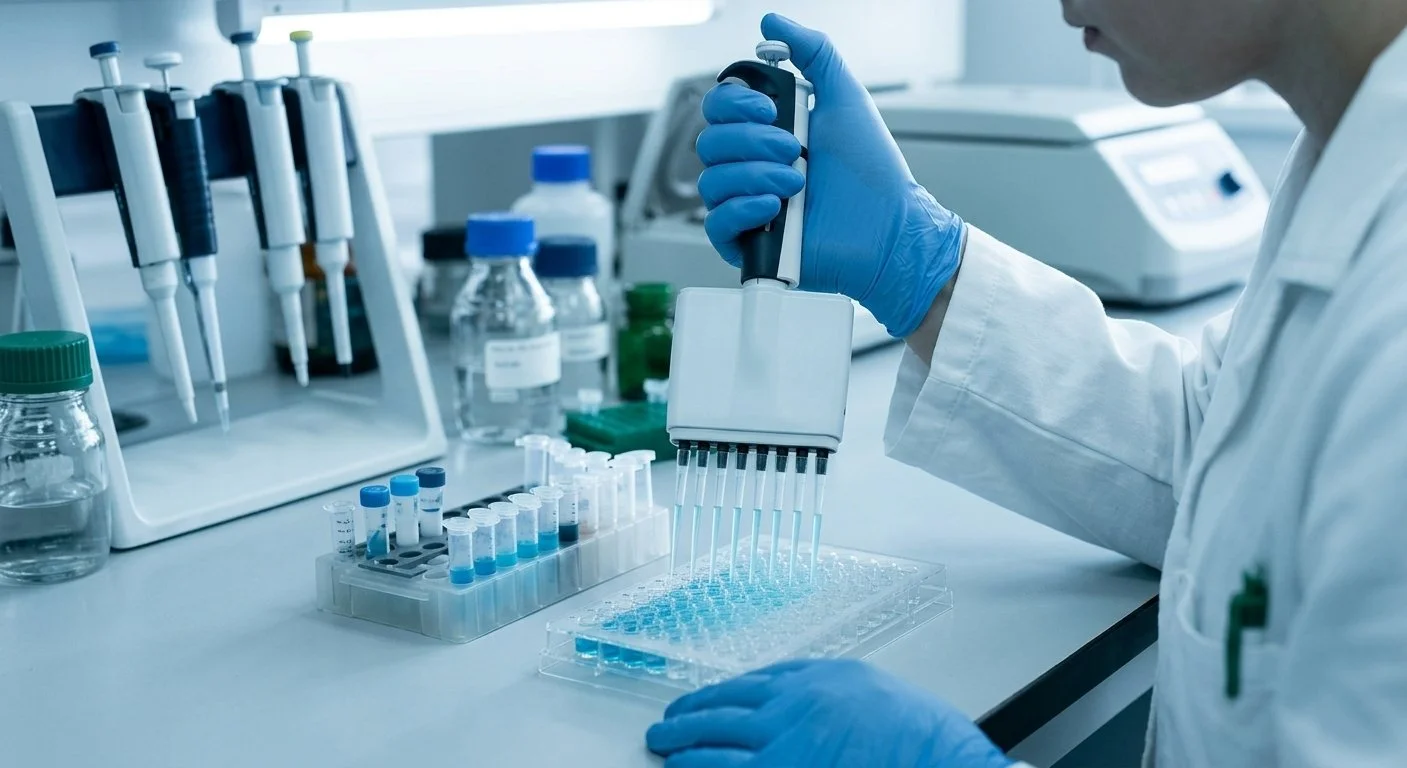
Building phase appropriate methods that are scientifically sound and ready for scale.
We evaluate, design, and refine analytical methods to ensure they are feasible, reliable, and aligned with the unique characteristics of your product. Our approach combines deep platform expertise with structured experimental design, enabling methods that transition smoothly from early development through qualification, validation, and tech transfer.
Method Feasibility
-
Early feasibility work prevents costly downstream failures by confirming whether a method can meet sensitivity, specificity, precision, and robustness requirements. It identifies gaps before development begins, ensuring resources are invested in approaches that will succeed through scale‑up and regulatory scrutiny.
-
Gap analysis of existing or proposed methods to assess performance limitations.
Platform suitability evaluation across ELISA, cell‑based assays, qPCR, flow cytometry, and other modalities.
Preliminary parameter screening to determine critical reagents, assay conditions, and detection ranges.
Risk‑based feasibility planning to prioritize development activities and reduce uncertainty.
-
Early identification of method risks and limitations.
Clear direction on whether to refine, redesign, or replace a method.
Reduced development timelines through targeted, data‑driven planning.
Higher confidence before entering formal development, qualification, or validation.
-
Feasibility assessment report summarizing platform suitability, risks, and recommended next steps.
Gap analysis outlining performance limitations, critical parameters, and required development work.
Preliminary screening data packages with statistical summaries and interpretation.
Risk‑based feasibility plan mapping development priorities and decision points
Method Development
-
Well‑designed analytical methods form the backbone of product characterization, release testing, and comparability studies. Strong development ensures methods are accurate, reproducible, and capable of supporting regulatory submissions and long‑term manufacturing needs.
-
Fit- for-purpose method design aligned with ICH guidelines and phase‑specific expectations.
Optimization of critical assay parameters including incubation times, reagent concentrations, instrument settings, and sample preparation workflows.
DOE‑supported development to efficiently evaluate variable interactions and define optimal operating conditions.
System suitability and acceptance criteria establishment to ensure long‑term method consistency.
Development reports summarizing experimental design, data analysis, conclusions, and next‑step recommendations.
-
Methods that are robust, reproducible, and ready for qualification and validation.
Reduced variability across operators, instruments, and testing sites.
Strong scientific justification for method design decisions.
Streamlined progression into robustness studies, qualification, and tech transfer
-
Full method development report including experimental design, optimization data, and rationale for final conditions.
DOE matrices, factor evaluations, and statistical analyses supporting parameter selection.
Draft method procedure or SOP‑ready workflow reflecting optimized assay conditions.
System suitability criteria, acceptance limits, and recommended in‑process controls.
Development summary slide deck for internal review, governance meetings, or regulatory interactions.